Teaching misogyny, masculinity and online influence in PSHE
Lessons that help pupils recognise what they are being sold online, without making boys the problem or handing the influencer the lesson. Taught in your classrooms, or taught to your staff.
Named in the RSHE statutory guidance in force from September 2026. Read the guidance
Built around the 2026 statutory guidance · Direct teaching and staff CPD
Sara Stafford, Teacher, Highbury Grove School, LondonThe sessions were excellent! You create an atmosphere that is both highly informative and a lot of fun. My students have loved having you answer their - sometimes tricky - questions.
It’s not just about Andrew Tate
Many of us are aware of and concerned about the influence of figures like Andrew Tate on vulnerable boys and young men. The obvious response is a lesson with his name on it, but naming him introduces him to the pupils who had not heard of him, could send some of them searching, and gives him disproportionate weight in the room.
He is not absent from the teaching. He appears where he is useful, in the lesson on why this material is persuasive, because pretending pupils have not heard of him fools nobody. What changes is that he is an example rather than the subject.
Separating the need from the answer
The reason this material reaches boys is that it attaches itself to things that are not wrong to want. Confidence. Money. Fitness. A relationship. A way through rejection. Somewhere to belong.
That distinction runs through every lesson in the sequence. It is also what lets a boy who follows this content stay in the room, because the lesson is not an accusation aimed at him.
Not a unit about boys behaving badly
Restrictive ideas about masculinity harm boys too, including by making it harder to ask for help. A sequence that spends five lessons telling boys what not to be, and never offers a version of themselves worth having, fails the pupils it most needs to reach. Girls in the room need the analytical tools as much as anyone, not a supporting role in someone else’s lesson.
For Year 9 the sequence also stays away from incel terminology. The government guidance on that material is written for Year 10 and above. The ideas underneath it, rejection, entitlement, blame and dehumanisation, are taught here without handing thirteen year olds the vocabulary.
Start from what boys actually think
A staffroom usually arrives at this topic with a picture already formed, in one direction or the other. Correcting it first makes the rest of the planning easier, because a sequence built on the wrong premise about the boys in the room teaches the wrong lesson however well it is delivered.
Masculinity and misogyny: what do boys actually think? is free, and sets out sixteen survey findings with every number sourced to a named survey. The same sixteen run as a quiz, which asks for your number before it shows you the real one and takes about ten minutes. The gap between the guess and the answer is the useful part. Most people underestimate how much pressure boys report, and badly overestimate how much of the material they endorse. The quiz runs as a staff meeting starter, and the article reads just as well alone.
A pupil who learns to recognise the mechanism can apply it to the next person. A pupil who learns that one man is bad has learned almost nothing.
Gender, masculinity and influence for KS3
A worked example of how a sequence on this topic can be built. It is a sample rather than a fixed scheme: take one lesson and run it yourself, book the whole sequence, or use it as the spine of a drop day. Everything adapts to the year group, the prior knowledge in the room and what has already happened in your school.
- Notice
- Understand
- Interrogate
- Resist
- Replace
- Notice
The Rules of Gender
Who decides how boys and girls are supposed to behave?
Recognise gender stereotypes, and how ordinary expectations become restrictive for boys as much as for girls.
- Understand
Being a Man
When does an idea about masculinity become harmful?
Separate masculinity from the narrow expectations attached to it: toughness, status, dominance, emotional suppression and asking for help.
- Understand
Misogyny: More Than a Joke
When does an attitude towards girls and women become misogynistic?
Recognise misogyny in language, entitlement, objectification and control, including when it arrives as a joke.
- Interrogate
Why Would Anyone Believe This?
Why can harmful messages be genuinely attractive?
Understand the pull of confidence, money, belonging and certainty in figures like Andrew Tate, and find the leap from useful advice to unsupported claim.
- Resist
Influenced
How does your feed change what feels normal?
Analyse recommendation, repetition and social proof, and question a claim rather than judging a personality.
- Replace
What Does Strength Look Like?
What could masculinity look like without domination or misogyny?
Replace the model rather than only attacking it: confidence without dominance, disagreement without contempt, rejection without entitlement.
One activity from Lesson 4
Hook, truth, leap
Pupils take a claim from a composite influencer account and pull it into three parts. The point is not to decide whether he is good or bad, but to find the exact sentence where a reasonable idea stops being reasonable. Once pupils can do that, it works on the next person too.
- Hook
- What grabs attention? Average men get ignored. Stop being average.
- Truth
- What part of this is fair enough? Getting fitter, learning a skill and building confidence are things you can actually control.
- Leap
- Where does it go past the evidence? So if a girl is not interested, that proves she only cares about money and status.
Want this taught in your school?
We teach it
RSE delivery in your classrooms
A specialist takes the lessons with your pupils, so the hardest sessions are led by someone who teaches them every week.
Bring this to your pupilsYou teach it
Training for your staff
CPD that leaves your team able to teach this themselves, including what to do with the question nobody saw coming.
Train your team to teach itTell us the year group and where your pupils are starting from, and we will say what we would do. Not ready for that? The guidance below is free to read and written for the teacher taking the lesson.
Guidance for teaching this
Written for the teacher taking the lesson, not for us. Free to read, and useful whether or not you ever book anything.
-
 Teachers
Talking to Boys About Masculinity, Misogyny and Online Influencers
Talking to boys about masculinity, misogyny and online influencers under the 2026 RSHE guidance, including what boys actually think of Andrew Tate.
Read it -
 Teachers
How to Teach Consent Beyond "No Means No"
How to teach consent that goes beyond the legal definition. Practical approaches to the grey areas young people actually struggle with.
Read it -
 Teachers
Sharing Nudes, Sextortion and Deepfakes: What Schools Need to Know in 2026
What schools need to know about sharing nudes, sextortion, and deepfakes in 2026. Nudification apps, Outcome 21, and the updated DfE guidance.
Read it -
 Teachers
Teaching the hard topics when you're not a specialist
What to do when a hard RSE topic lands with you and you did not train in RSE. Work out what kind of hard it is, then prepare for that specifically.
Read it
These conversations are already happening
Questions pupils handed us anonymously, on paper, in schools we have worked in. Printed as they were written. Every one is answered in full on Okay to Ask.
-
 Relationships
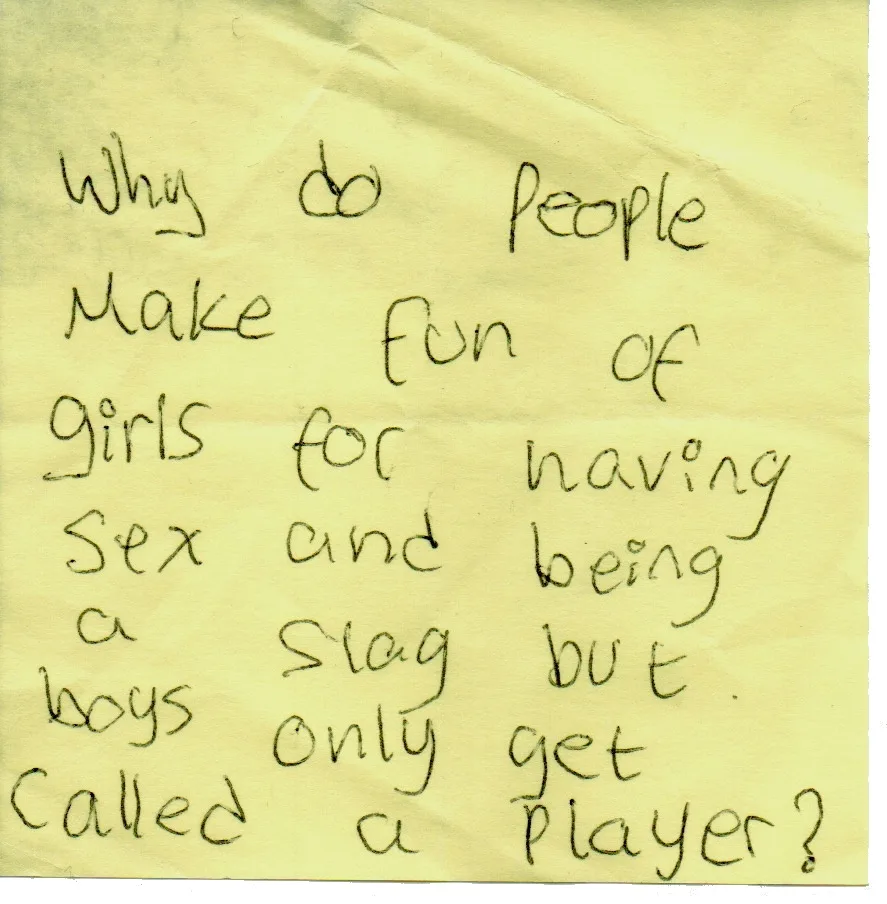
Why do people make fun of girls for having sex and being a slag but boys only get called a player?
Read the answer -
 Relationships
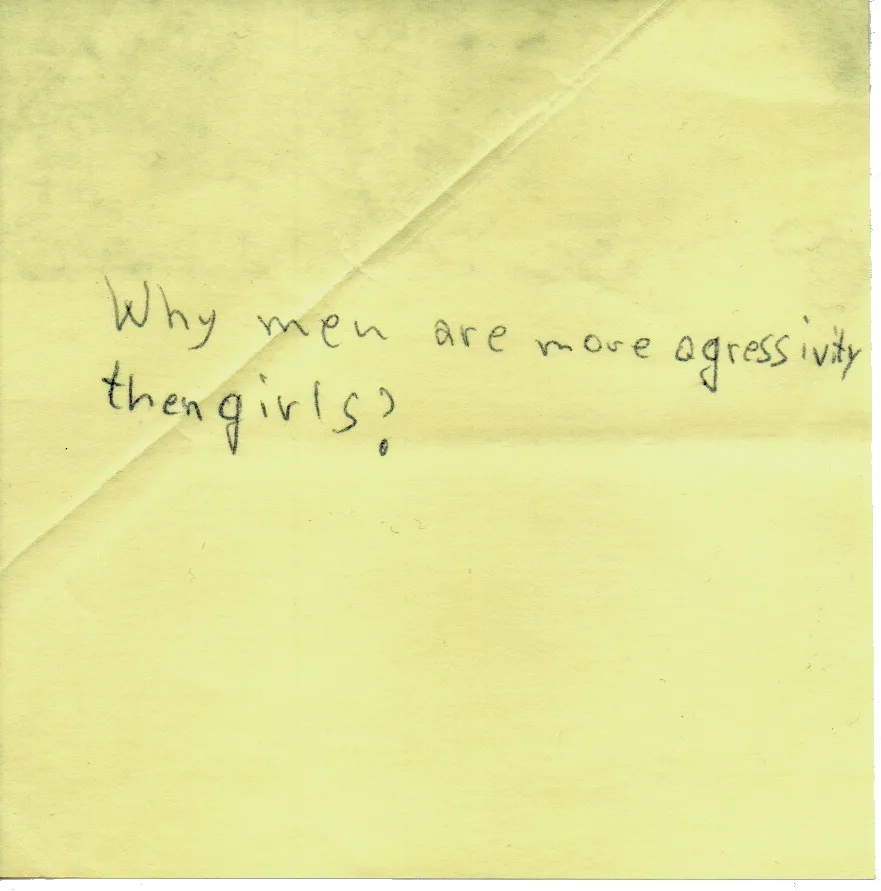
Why men are more agressive than girls?
Read the answer -
 Sex & the Law
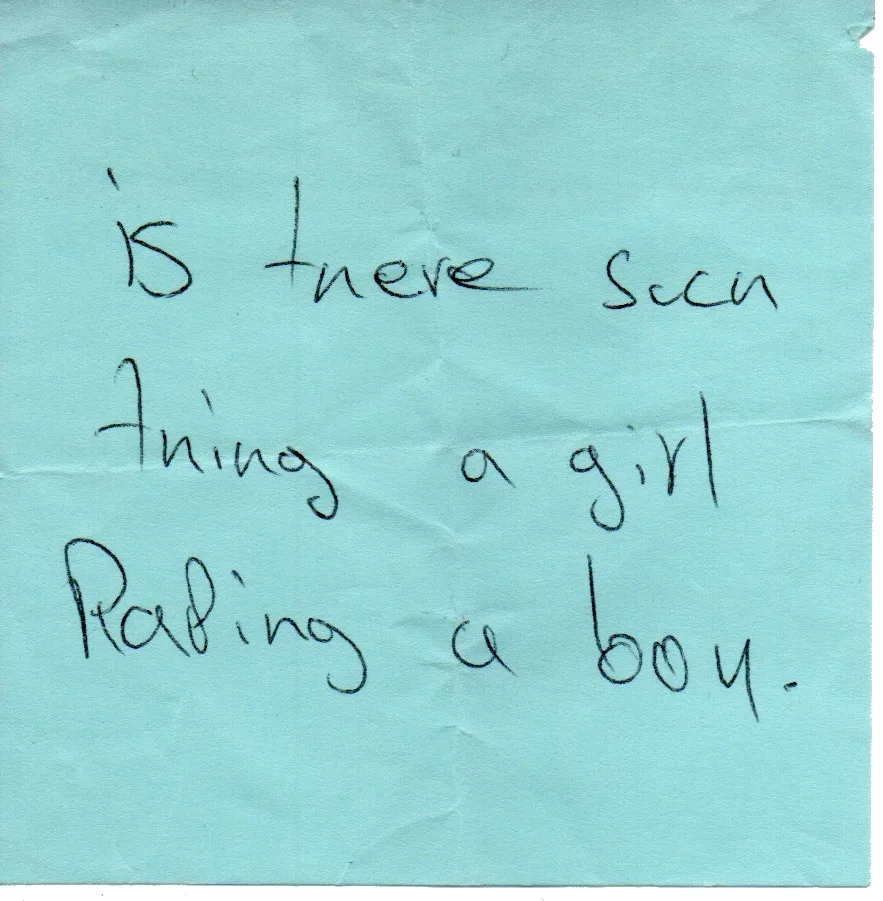
Is there such thing as a girl raping a boy?
Read the answer -
 Sexual Health
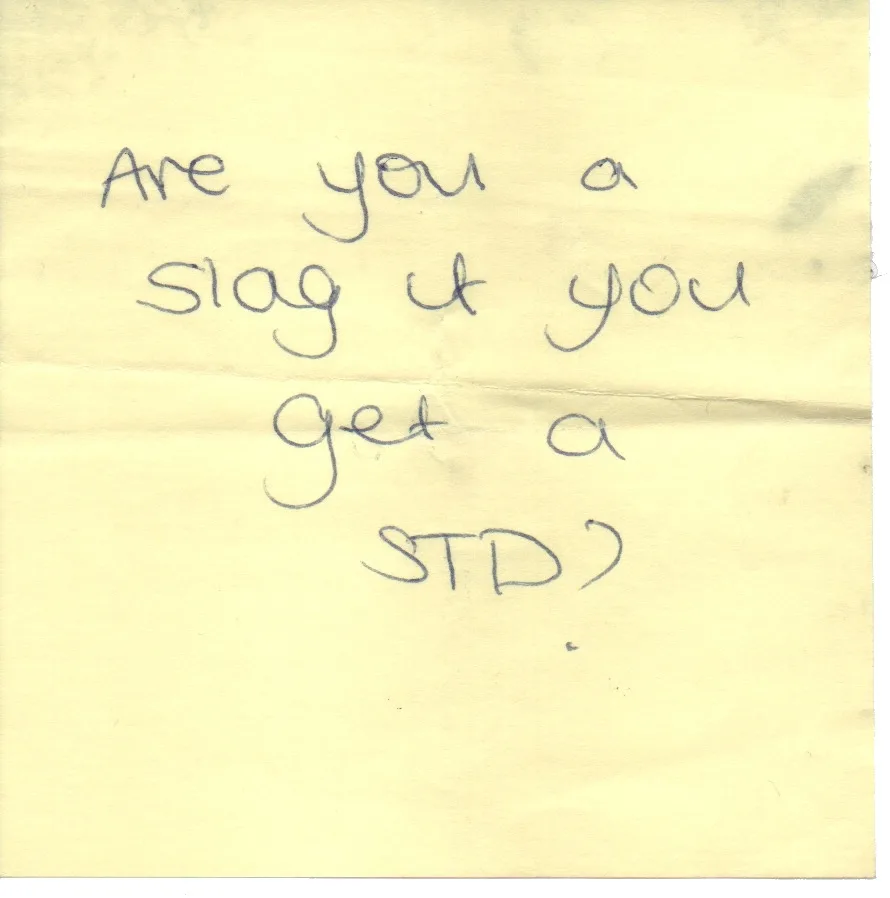
Are you a slag if you get an STD?
Read the answer
We teach these alongside it
See all 23 topic guidesAny of these can be taught in your classrooms or built into staff training, on their own or as part of a longer sequence.